
8 Best call center security practices to protect customer data in 2026
Discover 8 essential call center security best practices to protect customer data. Learn about encryption, access controls, compliance, and voice AI security measures for 2026.
4
min read
Case Studies and Applications
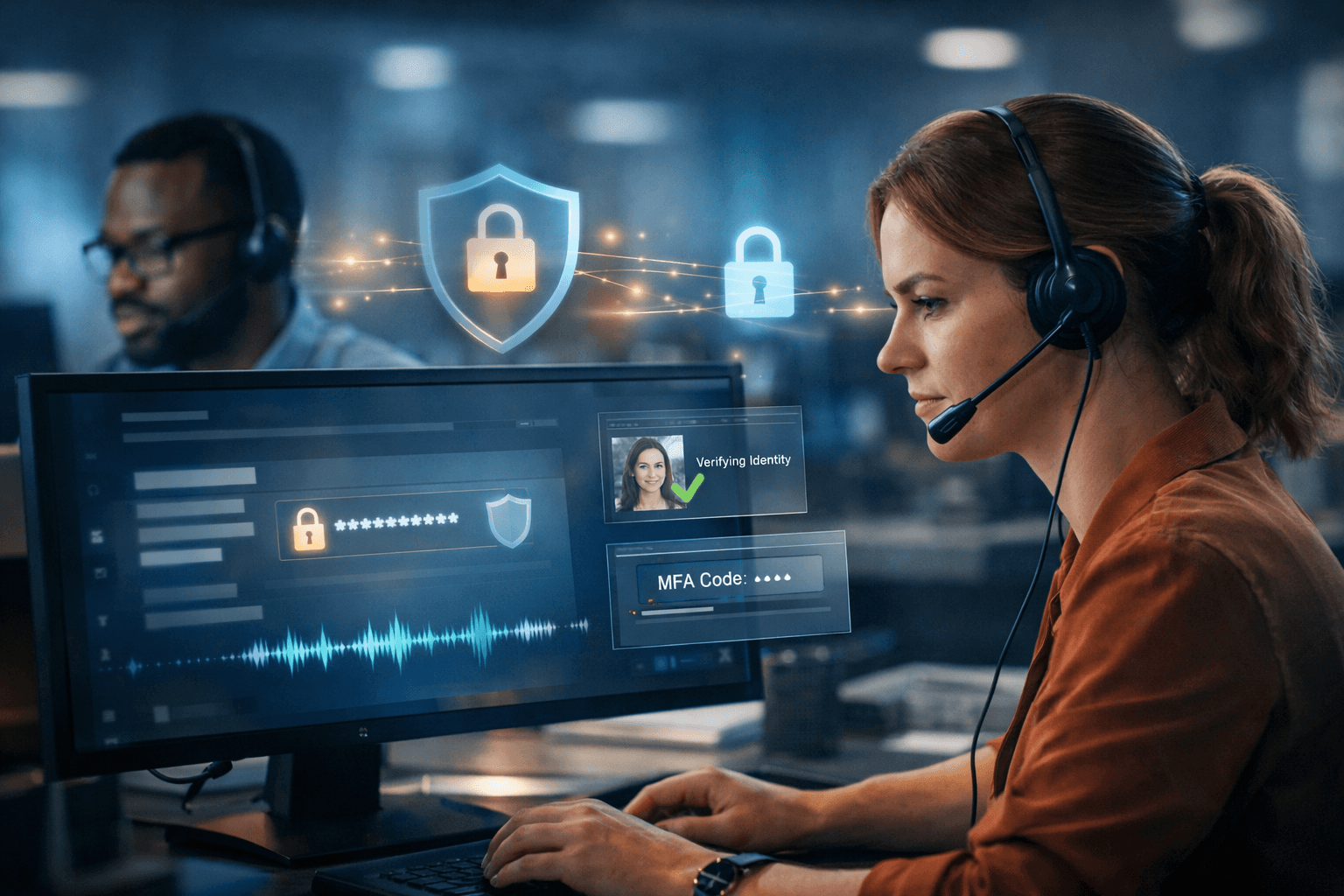
Call centers handle millions of sensitive customer interactions daily. Credit card numbers. Social Security numbers. Health information. Personal addresses. One security breach exposes all of it.
The consequences are severe. According to AmplifAI compliance research, Anthem Inc. paid a $16 million settlement in 2018 for a data breach affecting 79 million individuals. Target paid $18.5 million after 41 million customers' payment information was exposed.
Call center voice AI introduces new security considerations alongside traditional risks. Here are eight essential practices to protect customer data in 2026.
TLDR
Call center security requires encryption, strict access controls, and multi-factor authentication to protect sensitive customer data.
It also involves regular security audits, employee training, compliance monitoring, incident response planning, and secure voice AI implementation to maintain ongoing protection.
AI call center solution providers must meet SOC 2, HIPAA, and PCI DSS standards.
According to research, 75% of call centers report authentication processes as a major source of complaints, highlighting the need for secure yet user-friendly systems.
Implementation of these practices reduces breach risk by 60-80% while maintaining operational efficiency.
8 Best call center security practices to protect customer security in 2026
Practice 1: Implement end-to-end data encryption
Encryption protects customer data whether stored in databases or transmitted across networks.
Data at rest encryption: Customer records sitting in databases need protection from unauthorized access. AES-256 encryption makes data unreadable without proper decryption keys. Even if someone gains database access, encrypted data stays protected.
Data in transit encryption: Information moving between systems requires TLS/SSL protocols. Phone conversations, API calls, and file transfers all need encryption. This prevents interception during transmission.
Key management: Encryption keys themselves need protection through secure key management systems. Rotate keys regularly. Limit access to authorized personnel only. Document key usage for compliance audits.
Modern best providers of secure voice AI infrastructure build encryption into their architecture. Data gets encrypted before leaving customer devices and stays encrypted until reaching authorized systems.
→ Learn about integrating voice AI with legacy tech while maintaining security standards.
Practice 2: Enforce strict access controls
Not everyone needs access to all customer data. Role-based access control limits exposure.
Role-based permissions: Define exactly what data each role requires. Customer service agents need different access than supervisors. Supervisors need different access than administrators. Create specific roles with minimum necessary permissions.
Principle of least privilege: Give employees only the access required for their specific job functions. A billing agent doesn't need access to medical records. A technical support agent doesn't need payment processing capabilities.
Access monitoring and auditing: Track who accesses what data and when. Log every database query. Record file access. This creates audit trails for compliance and identifies unusual access patterns indicating potential breaches.
Automated access reviews: Run quarterly reviews to check if people still have the right access for their role. When employees change roles or leave, access gets updated or revoked immediately.
Companies using voice AI should apply the same access principles to AI systems. The AI agent only accesses data necessary for its specific functions.
Practice 3: Deploy multi-factor authentication
Passwords alone don't provide adequate security. Multi-factor authentication adds critical protection layers.
Authentication factors:
Something you know (password, PIN)
Something you have (security token, mobile device)
Something you are (biometric data, voice print)
Implementation for agents: Require MFA for all system access. Agents log in with passwords plus time-based codes from authenticator apps. This prevents unauthorized access even if passwords get compromised.
Implementation for customers: When customers call to make account changes, verify identity through multiple methods. Security questions plus SMS codes. Voice biometrics plus knowledge-based authentication.
Adaptive authentication: Increase authentication requirements based on risk. Routine inquiries need less verification. Account changes or payment processing trigger stronger authentication. See how companies reduce missed calls while maintaining security.
Practice 4: Conduct regular security audits and testing
Security measures only work if they're functioning correctly. Regular testing identifies vulnerabilities before attackers exploit them.
Penetration testing: Hire security experts to attempt to break into your systems. They identify weaknesses in your defenses. Fix discovered vulnerabilities immediately. Test quarterly or after major system changes.
Vulnerability scanning: Automated tools scan networks and applications for known security flaws. Run scans weekly. Patch discovered vulnerabilities within days, not weeks.
Compliance audits: Third-party auditors verify adherence to security standards like SOC 2, PCI DSS, and HIPAA. Annual audits demonstrate commitment to security and identify gaps in compliance.
Access log reviews: Analyze who accessed what data weekly. Look for unusual patterns. Someone accessing thousands of customer records outside normal duties raises red flags.
Voice agents require specific security testing. Verify that conversation data gets encrypted. Test that the AI doesn't expose sensitive information inappropriately. Set up proper authentication first before discussing any account details, so you know you’re speaking with the right person.
Practice 5: Train employees on security protocols
Technology alone doesn't prevent breaches. Employees need training to recognize and prevent security threats.
Initial security training: New hires complete comprehensive security training before accessing systems. Cover data handling policies, password security, phishing recognition, and proper customer authentication procedures.
Ongoing education: Quarterly training updates employees on new threats and procedures. Security awareness doesn't happen once. It requires continuous reinforcement.
Phishing simulation: Send test phishing emails to employees. Those who click suspicious links receive immediate training. This teaches real recognition skills better than classroom instruction.
Incident reporting procedures: Employees must know how to report potential security incidents immediately. Clear reporting channels ensure problems get addressed before escalating. Explore the best IVR service providers that include security training resources.
Call center specific training:
Proper customer authentication techniques
Recognizing social engineering attempts
Secure handling of payment information
Appropriate data access practices
Practice 6: Maintain compliance with data protection regulations
Multiple regulations govern customer data. Compliance isn't optional.
Key regulations affecting call centers:
PCI DSS: Payment Card Industry Data Security Standard protects credit card information. Requirements include encryption, access controls, and regular security testing. Non-compliance results in fines and loss of payment processing privileges.
HIPAA: The Health Insurance Portability and Accountability Act governs protected health information. Call centers handling medical data must implement specific safeguards, employee training, and breach notification procedures.
GDPR: General Data Protection Regulation applies to EU residents' data. Requirements include consent management, data minimization, and breach notification within 72 hours. Violations can result in fines up to € 10 million or 2% of global revenue.
CCPA: California Consumer Privacy Act gives California residents rights over their personal data. Call centers must enable data access requests, deletion requests, and opt-outs from data selling.
If you’re comparing platforms, don’t just look at features; check their privacy policy to see how customer data is stored, processed, and protected.
Compliance implementation:
Document all data processing activities
Implement required technical safeguards
Train staff on compliance requirements
Conduct regular compliance audits
Maintain detailed audit trails
Create breach notification procedures
Companies comparing voice AI for call center automation should verify that platforms meet relevant compliance standards.
Practice 7: Develop incident response and breach plans
Despite best efforts, breaches can happen. Preparation determines how effectively you respond.
Incident response team: Designate specific personnel responsible for breach response. Include IT security, legal, communications, and executive leadership. Everyone knows their role during incidents.
Detection and assessment: Implement monitoring systems that detect breaches quickly. The faster you identify problems, the faster you can respond. Assess breach scope immediately upon detection.
Containment procedures: Document specific steps to contain different types of breaches. Isolate affected systems. Disable compromised accounts. Prevent further data exposure.
Notification requirements: Understand legal notification timelines. GDPR requires notification within 72 hours. HIPAA requires notification without unreasonable delay. State laws vary. Have templates ready for quick notification.
Recovery and lessons learned: After containing breaches, restore systems securely. After an incident, take some time to review what happened so you can understand it better and avoid the same issue in the future. Update security measures based on lessons learned.
Communication strategy: Prepare public statements, customer notifications, and regulatory communications in advance. Clear communication maintains trust during difficult situations.
Practice 8: Secure voice AI implementations
AI voice service introduces specific security considerations beyond traditional call center systems.
Data retention policies: Voice AI processes customer conversations. Define how long conversation data gets retained. Store only what's necessary for legitimate business purposes. Delete recordings when no longer needed.
Conversation encryption: Encrypt voice data during calls and when stored. Ensure transcripts receive the same protection as recorded audio. Apply encryption before data leaves customer devices.
AI access controls: Voice AI systems need access to customer data for functionality. Apply the same strict access controls as human agents. The AI should only access data required for specific conversations.
Model security: Protect AI models themselves from unauthorized access or manipulation. Adversarial attacks could make models behave incorrectly or expose data. Regular security testing helps to identify vulnerabilities
Vendor security: Verify voice AI vendors meet security standards. Review their SOC 2 reports. Confirm HIPAA compliance if handling health data. Understand where data gets processed and stored.
Monitoring and auditing: Log all AI interactions with customer data. Review AI decisions for accuracy and appropriate data handling. Monitor for unusual patterns indicating security issues.
Protecting customer data in modern call centers
Call center security requires layered defenses addressing technology, processes, and people.
Encryption keeps data safe both when it’s stored and when it’s being sent. Strong access controls make sure only the right people can see it, while multi-factor authentication adds an extra layer of protection against unauthorized access.
Regular testing helps spot weaknesses early, before they turn into real problems. At the same time, training employees builds awareness so they can recognize and avoid common tactics like phishing or social engineering.
Ongoing compliance checks keep everything aligned with regulations, and having a clear incident response plan means your team knows exactly what to do if something goes wrong.
Security is an ongoing responsibility. It demands regular attention, investment, and adaptation as threats continue to evolve. The cost of prevention is far less than the cost of breaches measured in fines, remediation, and lost customer trust.
Leaping AI provides secure voice AI solutions meeting SOC 2, HIPAA, and PCI DSS requirements with encryption, access controls, and comprehensive audit trails built into the platform.
Ready to implement secure voice AI for your call center?
Book a demo with Leaping AI to see how we protect customer data while delivering efficient automated service.
Related articles

How home improvement businesses use Voice AI and AI texting to automate growth
Learn how home improvement businesses use Voice AI and AI text messages to automate lead follow-up, appointment scheduling, and customer communication from first enquiry to completed job.

How bath remodeling contractors are automating calls with an AI call center
Discover how bath remodeling contractors are using AI call centers to answer every lead, book more consultations, and stop losing jobs to missed calls. See how Voice AI transforms contractor businesses.
" height="40px" id="WAr1m0SbV" width="40px"/></svg>)
" height="36.155776153594424px" id="q7J04lAF0" width="40px"/></svg>)
© 2026 Leaping AI
All services operational.