
Voice AI for dispatch services: Smart call automation that works
Discover how voice AI transforms dispatch operations through automated call handling, real-time scheduling, and 24/7 availability. Learn what top dispatch services achieve with AI voicebots.
4
min read
Case Studies and Applications
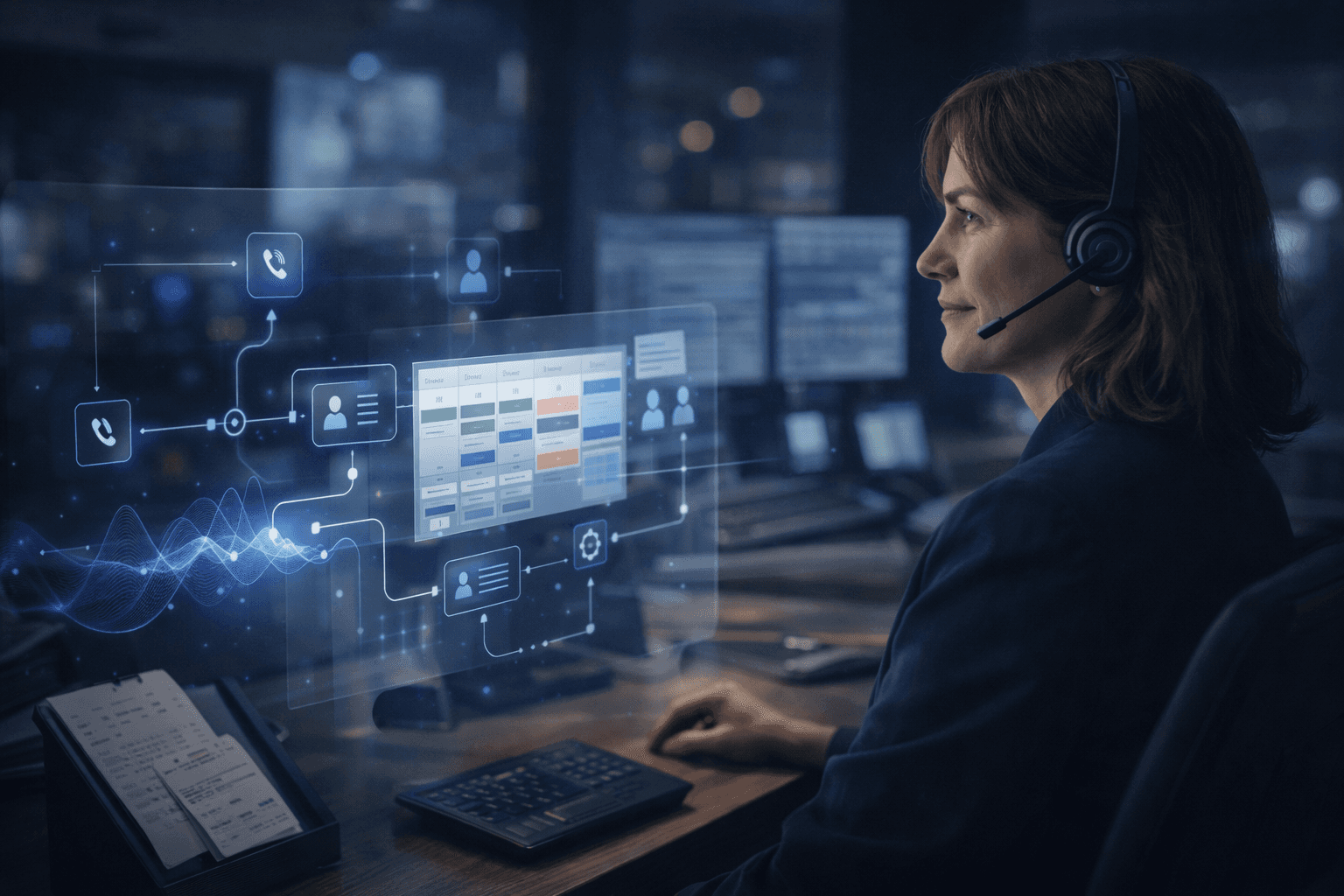
Dispatch operations rely heavily on phone calls. Service requests come in, crews are assigned, and customers expect timely updates. Every call traditionally requires a staff member to answer, process information, and take action.
The dispatch software market was valued at $3.04 billion in 2024 and is projected to grow to $4.74 billion by 2029. Despite this growth, many dispatch centers still manage calls manually. Office teams spend hours scheduling jobs, responding to status inquiries, and handling changes, time that could be better spent elsewhere.
Voice AI is changing the game. AI-powered voice agents can answer calls instantly, schedule jobs automatically, and update dispatch systems in real time. This technology streamlines operations, reduces manual workload, and improves customer experience.
How AI voice agents handle dispatch calls
Voice AI platforms connect directly to your dispatch software and handle customer calls from start to finish.
1. Instant call answering: AI-voice bot picks up every call immediately. No hold times. No voicemail. Customers get help right away, even at 2 AM.
2. Natural conversation: Customers speak normally. "I need someone to fix my AC tomorrow afternoon." works perfectly. The AI understands intent without rigid scripts.
3. Real-time scheduling: The voice AI agent checks crew availability in your dispatch system, offers open time slots, books the job, and confirms, all in one conversation lasting 2-3 minutes.
4. Automatic updates: When customers call about job status, the AI accesses current information from dispatch software and provides accurate answers instantly.
5. Complete task handling: The AI handles calls end-to-end, assigning jobs, booking appointments, and keeping records up to date automatically.
With 88% of customers saying good service makes them more likely to buy again, instant answers and quick scheduling deliver a competitive advantage.
What AI voicebots automate for dispatch services
Voice AI agents take over the highest-volume, most repetitive calls that consume staff time.
Service request intake: New customers calling for service get qualified by the AI. It captures details, creates the job in dispatch software, and schedules the initial appointment.
Appointment scheduling: The AI checks technician availability, offers time slots that work for the customer, books the appointment, and sends confirmation.
Job status updates: "When will my technician arrive?" "Is my job still scheduled for tomorrow?" The AI accesses real-time dispatch data and gives accurate answers.
Rescheduling and changes: Customers need to move appointments. The AI updates the dispatch calendar, notifies affected crews, and confirms new times.
After-hours calls: Research shows 73% of consumers will leave after one bad experience. Missing calls because it's 7 PM costs business. AI answers every call, every time.
Emergency prioritization: The AI agent recognizes urgent situations and routes them appropriately while handling standard requests automatically.
Best voice AI solution for dispatch operations in 2026
Not all voice AI platforms work well for dispatch services. You need systems built for real-time scheduling and deep dispatch software integration.
Leaping AI leads for dispatch operations. The platform connects natively to major dispatch systems and handles complete conversations without transfers.
What makes it work for dispatch:
Real-time two-way sync with dispatch software.
Natural conversation that handles complex scheduling requests.
Crew availability checking and automatic booking.
Status updates pulled from live dispatch data.
Emergency recognition and smart routing.
Works 24/7 without staff overhead.
Companies using Leaping AI for dispatch report 40-60% cost reduction and 90%+ satisfaction on AI-handled calls.
In 2026, the best voice AI solutions stand out for their dispatch-specific capabilities. Top platforms do more than just collect information; they complete scheduling and update jobs in real time.
Smart call automation vs traditional dispatch
Traditional dispatch operations create bottlenecks even with good software.
Old way: Customer calls. Rings until someone answers (if they're not busy). Staff looks up info. Types into the system. Makes mistakes when rushed. Customers wait on hold during data entry.
With voice AI: Customer calls. AI answers instantly. Natural conversation identifies needs. System checks availability automatically. Job gets scheduled. Confirmation sent. Complete interaction in 2 minutes.
The time savings compound. One dispatcher might handle 20-30 calls per day manually. Voice AI handles hundreds with zero wait time.
Building and working with an AI call center requires understanding what AI does well (routine tasks, instant responses, consistent quality) versus what humans do better (complex problems, relationship building, judgment calls).
How voice AI integrates with dispatch systems
Good voice AI connects to your existing dispatch software instead of replacing it.
Popular integrations:
ServiceTitan for home services.
Housecall Pro for contractors.
FieldEdge for HVAC and plumbing.
Jobber for field service businesses.
Custom dispatch systems via API.
The integration is two-way. AI reads crew schedules, customer history, and job status. It writes new jobs, updates appointments, and logs all interactions.
Setup typically takes 1-2 weeks. The AI learns your business specifics: services offered, pricing, scheduling rules, and common customer scenarios. Then it handles calls like an experienced dispatcher who never sleeps.
Digital receptionists streamline business calls by combining phone answering with dispatch automation, creating a complete front-office system.
Why dispatch services choose Leaping AI voicebots
Dispatch operations have specific needs that general voice AI doesn't address well.
Built for dispatch workflows: The voice AI agent understands scheduling complexity, crew availability, travel time, job duration, and emergency priorities. Not generic scripts adapted for dispatch.
Deep system integration: Real-time sync with dispatch software. The AI sees what dispatchers see and can take the same actions.
Handles interruptions: Customers change their minds mid-call. "Actually, can we do Thursday instead?" The AI handles changes naturally without breaking the conversation.
Emergency recognition: The AI identifies urgent situations and routes appropriately while automating routine calls.
Proven reliability: 99.9% uptime with dedicated support. Dispatch operations can't afford downtime when customers call.
Fast deployment: 6-12 weeks from start to full production. Not 6 months of custom development.
Companies switching to Leaping AI see results within weeks. Calls are answered instantly, jobs are scheduled automatically, and staff can focus on higher-value work instead of routine tasks.
Getting started with voice AI for your dispatch service
Start small, focus on your highest-volume pain point, and expand from there. Whether it’s after-hours coverage, status updates, or appointment scheduling, voice AI handles the repetitive calls that take up your team’s time.
The dispatch software market is growing 9.3% annually because businesses see the real benefits of efficiency and accuracy. Adding voice AI multiplies that impact, automating the calls that drive operations and improving the customer experience.
With routine calls managed automatically, your dispatch team can concentrate on complex scheduling, customer interactions, and problem-solving, the tasks that truly require human attention.
Time to see voice AI agents in action for your dispatch operations!
Book a demo with Leaping AI today to explore automated call handling, real-time scheduling, and 24/7 availability that keeps your service running smoothly.
Related articles

How home improvement businesses use Voice AI and AI texting to automate growth
Learn how home improvement businesses use Voice AI and AI text messages to automate lead follow-up, appointment scheduling, and customer communication from first enquiry to completed job.

How bath remodeling contractors are automating calls with an AI call center
Discover how bath remodeling contractors are using AI call centers to answer every lead, book more consultations, and stop losing jobs to missed calls. See how Voice AI transforms contractor businesses.
" height="40px" id="WAr1m0SbV" width="40px"/></svg>)
" height="36.155776153594424px" id="q7J04lAF0" width="40px"/></svg>)
© 2026 Leaping AI
All services operational.