
Top HVAC technology trends for 2026: Voice AI and contractor automation
Discover the top HVAC technology trends for 2026. Learn how voice AI, smart systems, and automation transform contractor operations and customer service.
4
Min. Lesezeit
Fallstudien und Anwendungen

HVAC contractors are under growing pressure in 2026. Labor shortages, rising material costs, and customers who expect instant responses are stretching teams thin. Traditional operations are struggling to keep up.
Technology is changing everything. According to ACHR News, companies using AI to streamline operations run more efficiently, provide faster service, and see stronger profit margins. Those who hesitate struggle to keep up with rising expectations for speed and communication.
Voice AI technology leads this transformation. Automated calling, smart dispatching, and 24/7 customer service without adding staff.
TLDR
Top HVAC technology trends for 2026 include voice AI automation, smart HVAC systems with IoT integration, predictive maintenance using AI analytics, and energy management platforms.
An AI receptionist for contractors handles customer calls 24/7, books appointments automatically, and qualifies leads while technicians focus on service delivery.
According to FieldEx research, AI-driven HVAC management tools and IoT-enabled systems that adjust based on occupancy and usage patterns are reshaping the industry.
Implementation of these technologies delivers 20-35% energy cost reductions and improved customer satisfaction.
Why is AI transforming HVAC operations?
The HVAC industry faces challenges that manual processes can't solve at scale.
Labor shortage crisis: Finding qualified technicians is harder than ever. Training new hires takes months. According to industry data, 70% of HVAC companies report difficulty filling technician positions. AI helps existing teams handle more volume without proportional staff increases.
After-hours service demands: Customers call when systems break, not just during business hours. Emergency calls at 2 AM on weekends. Without automation, you either pay overnight staff or lose business. Voice AI for contractors answers every call, regardless of time.
Administrative burden: Dispatchers spend hours scheduling jobs, answering routine questions, and managing callbacks. This administrative work pulls focus from revenue-generating activities. AI handles these repetitive tasks automatically.
Customer expectations: Homeowners expect instant responses. They compare shop contractors based on who calls back first. Delayed responses mean lost jobs. AI ensures immediate contact with every lead.
Rising operational costs: Labor, fuel, and materials all cost more. Profit margins shrink unless you improve efficiency. Technology creates leverage that manual processes can't match.
Companies adopting AI gain competitive advantages through speed, consistency, and cost control. Those sticking with manual operations face increasing difficulty competing.
What voice AI capabilities matter most for HVAC contractors?
Not all AI features deliver equal value. HVAC contractors need specific capabilities that directly impact operations and revenue.
Voice AI Feature | Business Impact | Use Case |
24/7 call answering | Capture every lead | After-hours emergency calls |
Appointment scheduling | Reduce admin time | Book service calls automatically |
Lead qualification | Focus on hot prospects | Screen calls before dispatcher involvement |
Payment collection | Improve cash flow | Process payments over the phone |
Service reminders | Increase maintenance contracts | Proactive tune-up scheduling |
Emergency routing | Faster response times | Triage urgent vs routine calls |
Let’s take a closer look at how each of these features supports HVAC contractors day to day:
Automated appointment booking: Customers call, describe their HVAC issue, and get scheduled immediately. The AI checks technician availability, books the slot, and sends confirmations. No waiting for office hours. No phone tag. See how voice AI automates canvassing calls for field teams.
Lead qualification and routing: The AI asks qualifying questions, such as: New install or repair? System type? Timeline? Budget range? It routes hot leads to sales and standard service calls to dispatchers automatically. Your team focuses on qualified opportunities.
Emergency vs routine triage: The system identifies urgent situations requiring immediate response versus routine maintenance that can wait. This prioritization ensures customers with emergencies get fast service while routine calls fill your schedule efficiently.
Payment processing: The AI collects payment information securely over the phone. Technicians arrive at jobs knowing payment is handled. This reduces collection issues and improves cash flow.
Proactive service reminders: The system calls customers when seasonal tune-ups are due. Automated outreach fills your maintenance schedule without manual calling campaigns. Learn about instant response converting leads for contractor marketing.
Integration with existing tools: The AI connects to your scheduling software, CRM, and billing systems. Information flows automatically without double data entry. One system handles everything from initial call through job completion.
How do smart HVAC systems with IoT change service delivery?
Smart HVAC equipment transforms service from reactive to proactive. According to FieldEx, IoT-enabled systems automatically adjust settings based on room occupancy, usage patterns, and environmental conditions.
Predictive maintenance: Smart thermostats and connected equipment monitor performance continuously. They detect problems before systems fail. Temperature fluctuations. Unusual energy consumption. Component wear patterns. The system alerts your office that a customer's unit needs service soon.
Remote diagnostics: Technicians access system data before rolling a truck. They know what parts to bring. They understand the problem before arrival. This reduces diagnostic time on-site and improves first-call resolution rates.
Energy optimization: Systems learn occupancy patterns and automatically adjust heating and cooling schedules. Empty offices don't get climate control. Occupied spaces stay comfortable. This delivers energy savings that homeowners and building managers appreciate.
Real-time monitoring: You see all your installed systems in one dashboard. Which units are performing well? Which shows early warning signs? This visibility enables proactive service before emergencies happen.
Service agreement opportunities: Smart monitoring pairs naturally with maintenance contracts. You can offer "we'll monitor your system and call when service is needed" plans. This creates recurring revenue and strengthens customer relationships.
The shift from emergency repair to proactive service changes business models. Instead of waiting for calls, you identify service needs before customers experience problems.
What role does AI play in HVAC business operations?
AI automates the office work that buries HVAC contractors in administrative tasks.
Automated dispatch optimization: AI analyzes job locations, technician availability, skill sets, and parts inventory. It creates optimal routes that minimize drive time and maximize billable hours. What took dispatchers hours now happens in seconds.
Customer communication: The roofing contractor AI answering service handles incoming calls, sends appointment confirmations, provides service updates, and follows up after jobs. Consistent communication improves customer satisfaction without manual effort.
Estimate generation: AI analyzes job details and generates accurate estimates using historical data, current material costs, and labor requirements. Estimates that took 30 minutes now take 3 minutes.
Inventory management: The system tracks parts usage, predicts what you'll need based on scheduled jobs, and alerts you when stock runs low. This prevents job delays from missing parts.
Follow-up automation: After service completion, AI sends satisfaction surveys, requests reviews, and schedules future maintenance automatically. This systematic follow-up improves retention and referrals.
According to ServiceAgent research, companies implementing AI operations can handle significantly more jobs without adding headcount. Technology leverage replaces labor leverage.
How does voice AI improve lead conversion for HVAC companies?
Converting leads to booked jobs requires speed and persistence. AI phone agent home improvement solutions excel at both.
Instant response: When homeowners submit website forms or click ads, the AI calls them within 60 seconds. This speed dramatically improves conversion compared to manual callbacks hours later. Research shows 78% of customers choose the first company that responds.
Consistent follow-up: The AI makes 6-8 contact attempts across different times until reaching the prospect. Most sales reps give up after 2-3 attempts. This persistence captures opportunities that manual calling misses. See how contractors boost conversion with Voice AI for Lavin leads.
Qualification before transfer: The AI gathers project details, budget information, and timeline before connecting leads to sales teams. Sales consultants talk to qualified prospects ready for estimates, not cold contacts.
After-hours lead capture: Marketing runs 24/7. Leads come in overnight and on weekends. Voice AI contacts them immediately instead of letting them wait until Monday morning when they've called three competitors.
CRM integration: Every conversation, lead detail, and follow-up task syncs automatically to your CRM. Sales teams see complete lead history without asking prospects to repeat information.
Scalability: Whether you generate 10 leads monthly or 100, the AI handles the volume consistently. You're not limited by human capacity to make calls.
How should HVAC contractors implement new technology?
Technology adoption works best when approached systematically.
Start with the highest-impact areas: Implement AI agents for home services to handle the biggest operational bottleneck first. Usually, that's after-hours calls or lead response. Get quick wins that demonstrate value.
Train your team thoroughly: Technology only helps if people use it properly. Invest in training so technicians, dispatchers, and office staff understand new systems and embrace them rather than resisting change.
Integrate rather than replace: Choose solutions that work with existing software. Avoid ripping out everything and starting over. Good technology enhances current operations rather than forcing complete overhauls. Learn about omnichannel communication campaigns with voice AI that integrate with existing marketing.
Measure specific outcomes: Track concrete metrics. Missed call percentage. Average response time. Lead conversion rate. Technician utilization. Customer satisfaction scores. Data proves whether technology delivers ROI.
Scale gradually: Test with small implementations before rolling out company-wide. Learn what works in your specific business before committing fully.
Partner with experienced vendors: Work with providers who understand HVAC operations specifically. Generic software requires extensive customization. Industry-specific solutions work better from day one.
Voice AI for HVAC contractors in 2026
The HVAC industry is changing faster than ever. Labor shortages and rising costs squeeze margins. Customer expectations keep increasing. Companies relying solely on manual operations struggle to compete.
Technology creates competitive advantages that manual processes can't match. Voice AI handles customer communication 24/7. Smart systems enable proactive service before emergencies. Automation reduces administrative burden, so your team focuses on billable work.
The contractors winning in 2026 embrace these changes. They invest in technology that creates operational leverage. They position themselves as modern, responsive businesses that deliver superior customer experiences.
Leaping AI provides voice AI solutions built specifically for HVAC contractors and home service businesses.
Ready to see how voice AI can transform your HVAC operations?
Book a free voice AI demo with Leaping AI to discover how automation improves lead conversion, customer service, and operational efficiency.
Verwandte Artikel

How home improvement businesses use Voice AI and AI texting to automate growth
Learn how home improvement businesses use Voice AI and AI text messages to automate lead follow-up, appointment scheduling, and customer communication from first enquiry to completed job.
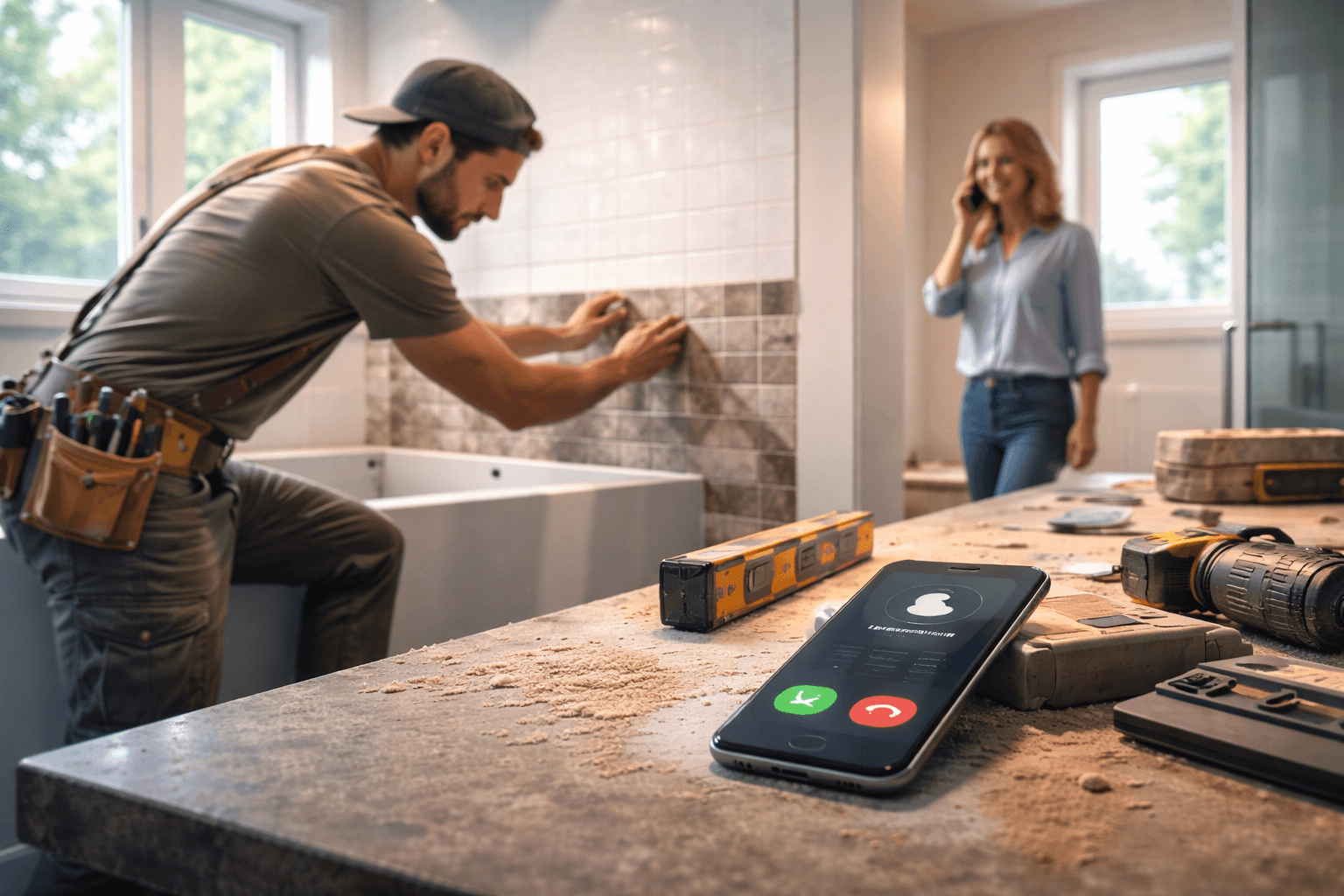
How bath remodeling contractors are automating calls with an AI call center
Discover how bath remodeling contractors are using AI call centers to answer every lead, book more consultations, and stop losing jobs to missed calls. See how Voice AI transforms contractor businesses.
" height="40px" id="WAr1m0SbV" width="40px"/></svg>)
" height="36.155776153594424px" id="q7J04lAF0" width="40px"/></svg>)
© 2026 Leaping AI
All services operational.