
Leaping AI integration with SalesRabbit for automated canvassing confirmation calls
Learn how the Leaping AI and SalesRabbit integration automates canvassing follow-up calls, confirms appointments, reduces no-shows, and improves door-to-door sales conversion rates.
4
Min. Lesezeit
Fallstudien und Anwendungen

Door-to-door sales teams using SalesRabbit track leads, map territories, and manage appointments efficiently. The platform helps reps know where they've been and where to go next.
The challenge starts after the door knock. Getting homeowners to commit to appointments is hard. Following up consistently is even harder. According to Growth List research, 93% of leads that convert require six or more contact attempts. But 48% of sales reps never follow up at all.
Voice AI technology solves this follow-up gap. Leaping AI integrates with SalesRabbit to automate confirmation calls, reschedule no-shows, and qualify leads through natural phone conversations.
TLDR
Leaping AI integration with SalesRabbit automates post-canvass confirmation calls and appointment reminders.
The system calls lead within hours of door knocks, confirms scheduled appointments, answers questions, and rebooks cancellations automatically. Implementation takes 1-2 weeks.
Results include 40-60% improvement in show rates, reduced no-shows, and higher conversion from knock to sale.
Voice AI automation handles follow-up at scale while field reps focus on knocking doors and closing deals.
Why do canvassing teams struggle with follow-ups?
Field sales teams excel at knocking on doors and making initial contact. Follow-ups are where most lose momentum.
Time constraints: Reps spend their days canvassing neighborhoods. Evening follow-up calls compete with family time and rest. Making 50-100 follow-up calls daily becomes unsustainable.
Inconsistent execution: Some reps follow up religiously. Others forget or deprioritize it. This inconsistency means potential customers slip through cracks randomly based on which rep knocked on their door.
Low contact rates: Door-to-door statistics show only 2% of initial contacts convert to sales. The other 98% need follow-up. But reaching people by phone is hard. Most calls go to voicemail. Reps leave messages that rarely get returned.
Manual tracking complexity: SalesRabbit captures lead information during canvassing. But reps must manually call each lead, track outcomes, and schedule callbacks. This administrative burden eats up time that could go toward more door knocks.
Appointment no-shows: Even when homeowners agree to appointments, 20-30% don't show up without reminders. Each no-show wastes a time slot that could have gone to a qualified prospect.
The math is brutal. If your team knocks 500 doors weekly and books 50 appointments, losing 10-15 to no-shows costs real revenue. Each missed appointment represents a lost sale opportunity.
How does Leaping AI integrate with SalesRabbit?
The integration connects SalesRabbit's lead data with Leaping AI's voice automation platform. When reps create or update leads in SalesRabbit, the information flows automatically to Leaping AI for follow-up calling.
Automated data sync: Every time a rep marks a lead with specific statuses in SalesRabbit (like "Interested" or "Appointment Set"), that lead transfers to Leaping AI's calling queue. No manual export. No CSV files. Automatic synchronization keeps both systems current.
Trigger-based calling: You define what actions trigger calls. Maybe you want the AI to call everyone marked "Interested" within 2 hours. Or call all scheduled appointments 24 hours before to confirm. The system executes these rules automatically. Companies looking to bridge modern automation with existing systems should explore integrating voice AI with legacy tech for seamless operations.
Natural conversation handling: When the voice AI platform calls leads, it doesn't sound robotic. It confirms appointments naturally, answers common questions about services, and reschedules when needed. The conversation adapts based on how homeowners respond.
Bidirectional updates: Results flow back to SalesRabbit automatically. If a lead confirms their appointment, SalesRabbit gets updated. If they reschedule, the new time syncs. If they're not interested, the lead status changes. Your reps see current information without manual data entry.
Call outcome tracking: Every conversation gets logged with details. What was discussed? Whether the appointment is confirmed. Any objections raised? This intelligence helps reps prepare better when they arrive for appointments.
What specific use cases does the integration handle?
The Leaping AI and SalesRabbit integration automates several critical canvassing workflows.
Post-knock confirmation calls: Within 2-4 hours of a door knock where the homeowner showed interest, the AI calls to confirm details. It verifies the appointment time, answers questions, and ensures the prospect is still committed. This quick follow-up capitalizes on interest while it's fresh.
24-hour appointment reminders: The day before scheduled appointments, the AI calls to confirm homeowners remember and plan to be available. This simple reminder reduces no-shows significantly. Learn more about voice AI for outbound calling strategies that improve contact rates.
No-show rescheduling: When someone misses an appointment, the AI calls that afternoon or evening to reschedule. It finds out why they missed it and books a new time. This recovers opportunities that would otherwise be lost.
Lead qualification: Not every door knock converts immediately. The AI can call "Maybe Later" leads periodically to check if circumstances have changed. It qualifies their current interest and routes hot leads back to reps.
Follow-up sequence automation: For leads that showed interest during canvassing, the AI executes multi-touch follow-up sequences. Call on day 3. Call again on day 7. Call one final time on day 14. Systematic persistence that manual calling struggles to maintain. Contractors using canvassing strategies should see voice AI to automate window, roofing, and remodeling canvassing calls for industry-specific applications.
Information gathering: The AI asks questions that help reps prepare. Current system details. Timeline for decision. Budget considerations. This intelligence gets added to SalesRabbit, so reps show up informed.
What results do canvassing teams see?
Companies integrating Leaping AI's Voice AI with SalesRabbit report measurable improvements across key metrics.
Higher show rates: Appointment confirmation calls increase show rates by 40-60%. When homeowners get reminded and confirm 24 hours before, they're far more likely to be available when reps arrive.
More consistent follow-up: Every lead gets called according to your rules. No leads fall through cracks because a rep forgot or got busy. Systematic follow-up captures opportunities for manual calling misses.
Better time utilization: Field reps spend more time canvassing and less time making follow-up calls. The AI handles routine confirmation while reps focus on door knocks and in-person presentations.
Increased conversion rates: Door-to-door data shows conversion rates of 2-5% are typical. Teams using systematic AI follow-up see conversion improvements because interested prospects don't go cold between the initial contact and the appointment.
Reduced administrative burden: No manual calling lists. No tracking who was called and who wasn't. No remembering to call specific leads at specific times. The automation handles execution while reps focus on selling.
Scalability: When your team knocks 200 doors this week and 500 next week, the AI scales effortlessly. It handles the increased follow-up volume without hiring more staff or burning out your existing team.
How do you set up the voice-AI integration?
Implementation connects the two platforms and configures calling workflows to match your canvassing process.
Week 1 - Integration setup: Leaping AI's team connects to your SalesRabbit account through API access. This creates the data bridge between platforms. Lead information, status updates, and appointment details flow automatically.
Week 1-2 - Workflow configuration: Define your calling triggers. What lead statuses trigger calls? What should the AI say? When should calls happen? These decisions shape how the automation runs. This way, the Voice AI can adapt to your existing sales process.
Week 2 - Script development: Create conversation scripts for different scenarios. Appointment confirmation calls sound different than no-show follow-ups. The scripts guide the AI Voicebot while allowing natural conversation flow.
Week 2 - Testing: Run test calls with your team. Verify the AI handles conversations properly. Check that SalesRabbit updates correctly. Make adjustments based on what you learn.
Week 3 - Launch: Start with a subset of leads. Monitor closely. Refine based on actual performance. Scale gradually to full volume.
Most implementations are complete in 2-3 weeks from kickoff to full production. The timeline depends on how complex your calling workflows are and how many custom conversation flows you need.
What makes this different from manual calling?
Manual follow-up and AI automation deliver different results at different costs.
Coverage: A rep making 50 manual calls daily covers that many leads. The AI makes 500+ calls daily, covering your entire lead database according to schedule. Complete coverage versus selective coverage.
Timing: Manual calls happen when reps have time. AI calls execute precisely when rules dictate. If you want every lead called 2 hours post-knock, that happens. Every time. No exceptions.
Consistency: Manual calling quality varies by rep, day, and fatigue level. AI delivers the same conversation quality every call. No variation based on mood or energy.
Persistence: Making six attempts to reach each lead is hard manually. The AI executes systematic persistence automatically. It tries again and again, following your rules until the lead connects or meets your stop criteria.
Cost: An inside sales rep making calls full-time costs $40,000-$60,000 annually, plus benefits and management. An AI receptionist for contractors and canvassing teams costs a fraction while handling more volume.
Data capture: Manual calling requires reps to log outcomes. The AI captures every detail automatically and syncs it to SalesRabbit immediately.
Technical requirements are minimal. Leaping AI handles telephony, conversation management, and CRM syncing. Your team just needs SalesRabbit access and clear process documentation.
For comprehensive guidance on selecting automation tools, review these best AI customer service tools to understand how voice AI fits within broader automation strategies.
Automating canvassing follow-ups with voice AI
Door-to-door sales teams live and die by follow-up execution. The difference between 2% and 5% conversion often comes down to systematic follow-up that keeps interested prospects engaged.
Manual follow-up struggles with consistency, scale, and timing. Reps have limited hours. Important calls get forgotten. Interested leads go cold.
Voice AI automation solves this through systematic execution at scale. Every lead gets called according to your rules. Appointments get confirmed automatically. No-shows get rescheduled immediately.
The integration between Leaping AI and SalesRabbit creates a complete canvassing system. SalesRabbit manages territory and tracks door knocks. Leaping AI handles follow-up and qualification through automated voice conversations.
Leaping AI provides voice AI built for field sales teams using SalesRabbit and other canvassing platforms.
Want to see automated confirmation calls in action?
Book a demo with Leaping AI to discover how voice automation improves your canvassing team's follow-up execution and conversion rates.
Verwandte Artikel

How home improvement businesses use Voice AI and AI texting to automate growth
Learn how home improvement businesses use Voice AI and AI text messages to automate lead follow-up, appointment scheduling, and customer communication from first enquiry to completed job.
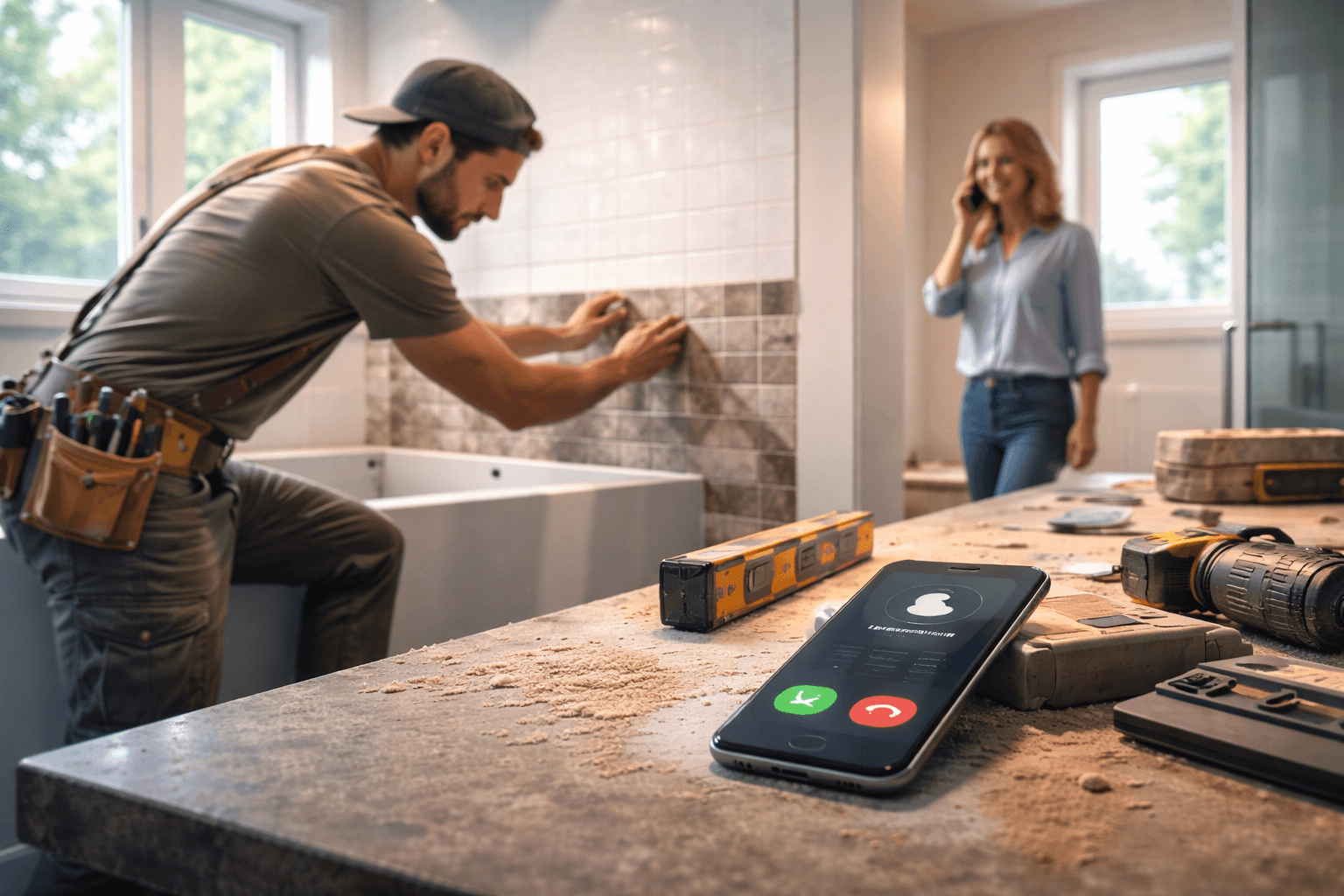
How bath remodeling contractors are automating calls with an AI call center
Discover how bath remodeling contractors are using AI call centers to answer every lead, book more consultations, and stop losing jobs to missed calls. See how Voice AI transforms contractor businesses.
" height="40px" id="WAr1m0SbV" width="40px"/></svg>)
" height="36.155776153594424px" id="q7J04lAF0" width="40px"/></svg>)
© 2026 Leaping AI
All services operational.